
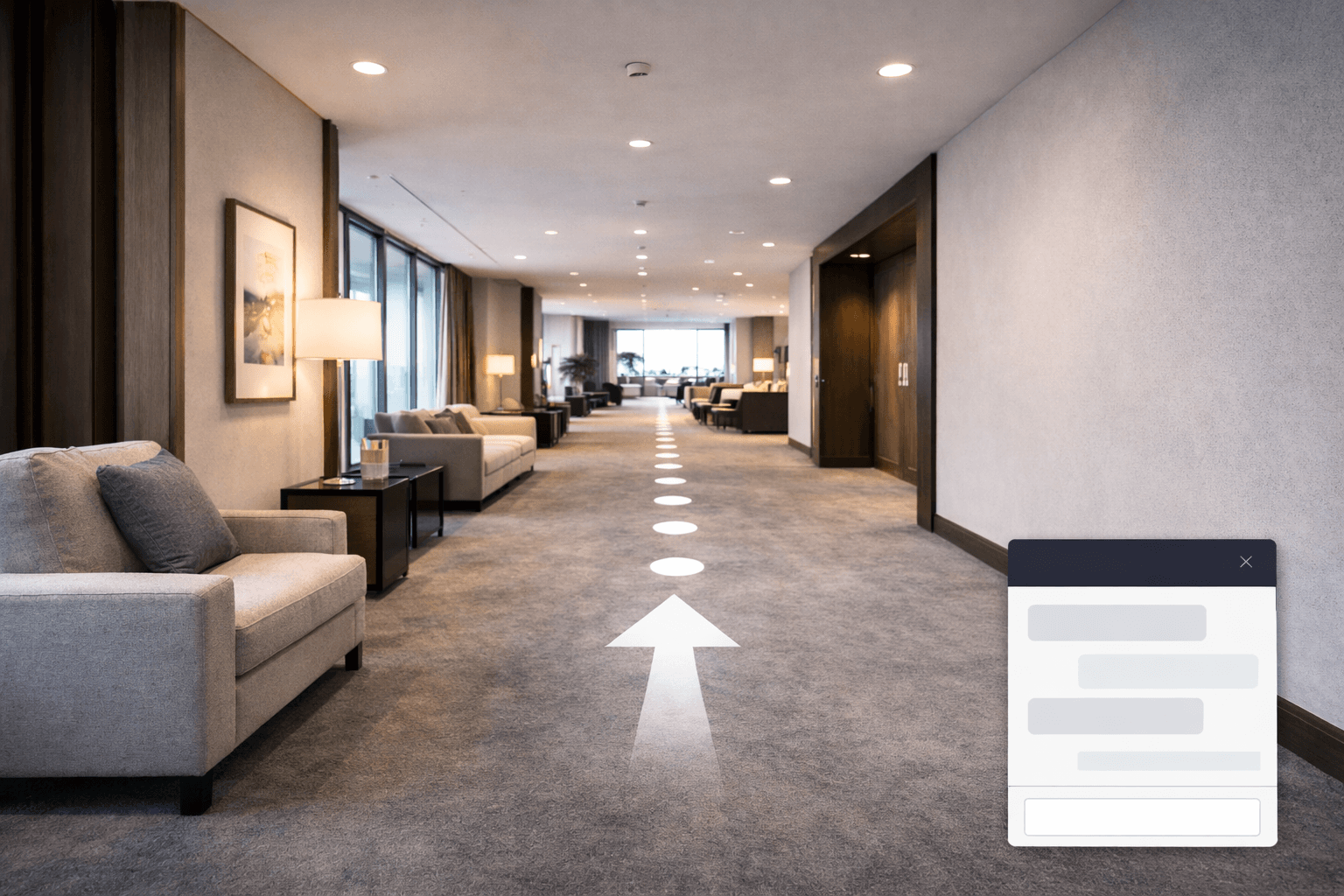
Can an AI Chatbot Move a Virtual Tour?
A clear guide to how AI chatbots can move users through virtual tours using navigation points, triggers, and model switching logic.
Short answer: yes, if movement is configured properly
A common search is: can an AI chatbot move a virtual tour?
In TourBots, the answer is yes. The chatbot can guide users to specific tour points and, where configured, across multiple models in one tour experience.
Movement quality depends on setup discipline, not just turning the feature on.
How movement works in practice
There are three core components:
- Navigation points in the tour
- Trigger logic that maps visitor intent to an action
- Action execution to navigate to the correct point or model
When these are configured well, the chatbot does not just answer questions — it actively guides the visitor journey.
Step 1: Build clean navigation points
Create points at meaningful decision moments, not at random camera positions.
Good examples:
- pricing or package area
- key feature demonstration area
- trust and proof area
- booking or conversion area
Use consistent naming standards so triggers remain manageable.
Step 2: Map visitor intent with triggers
Define the conditions that should activate movement.
Typical patterns:
- keyword intent (for example, “show me meeting rooms”)
- message-count prompts after repeated uncertainty
Each trigger should point to a clear action and message so users understand what is happening.
Step 3: Handle multi-model movement intentionally
If one tour includes multiple Matterport models, movement must account for model boundaries.
Best practice:
- keep one primary model for anchor context
- add secondary models with clear purpose
- test model switching prompts in Playground and live embed
This prevents broken routes and confused user journeys.
Common issues and fixes
- Movement does not trigger: keywords too broad or not aligned to user phrasing.
- Wrong destination point: ambiguous point naming.
- Model switch fails: secondary model mapping not configured correctly.
- User confusion: no clear assistant confirmation before movement.
SEO-relevant implementation takeaway
If your audience is searching for an AI chatbot that moves a virtual tour, what they actually need is guided navigation architecture:
- strong point taxonomy
- reliable triggers
- clear movement messaging
- routine QA
That is what makes movement feel intelligent instead of unpredictable.
Final takeaway
AI-driven movement can materially improve engagement and conversion in virtual tours, but only when configured as a system.
Treat navigation as a product flow, not a one-off feature, and you get a tour experience that feels guided, useful, and commercially stronger.